
Blog
Chess for kids, explained to families
Rules, techniques, studies and tips to teach chess at home, plus honest comparisons of the apps on the market.
What worries parents
The real problems at home: focus, frustration, screens and not knowing the game yourself. With ideas you can use today.
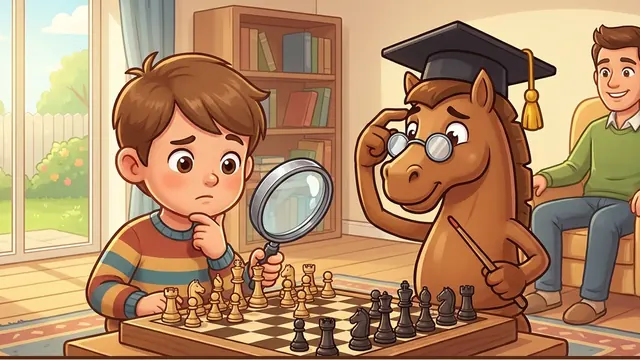 What worries parentsMy child plays too fast: teaching them to stop and lookThey move in two seconds and regret it. The "checks, captures, threats" method, checking before moving and stop-and-look exercises for impulsive kids.
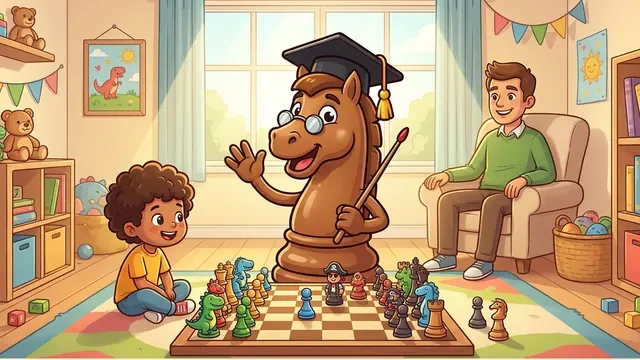 What worries parentsMy child is losing interest in chess: how to bring the spark backThey started with excitement and now the board gathers dust. Why it happens, small goals, characters, variety and when to let it rest without pushing.
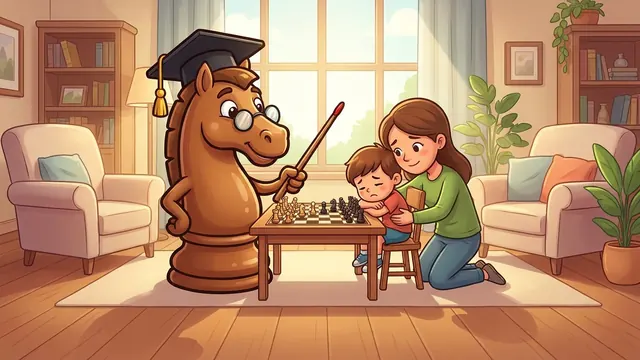 What worries parentsMy child gets upset when losing at chess: what to doTears, an overturned board or "I'm never playing again" after a loss. How to help your child cope with defeat: an after-loss routine, your reaction and undo.
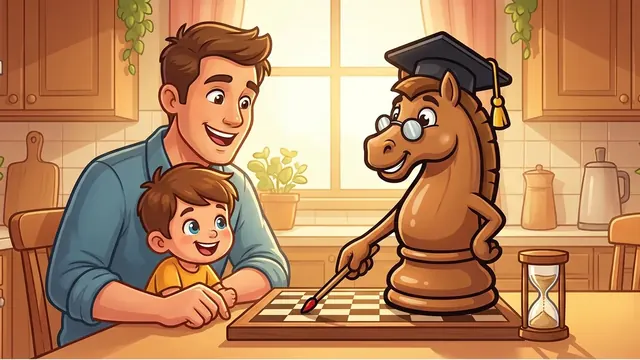 What worries parentsMy child can't focus: what chess can (and can't) doWhat is normal for a child's attention, what chess can offer and what it can't, and how to practise focus at home with short 10-minute games.
 What worries parentsI don't know chess and I want to teach my child: a 4-week planYou don't need to know chess to support your child. Learn together with a 4-week plan, 15 minutes a day and a knight professor that plays the teacher.
 What worries parentsChess lessons too expensive or far away: a home alternativeWhen a club or teacher is irreplaceable and when an app plus a home routine is enough. An honest guide for families with no club nearby or a tight budget.
 What worries parentsChess and screens: using screen time with a clear headWhat WHO (2019) and Spanish paediatricians (2024) say about screens, how a chess app fits, what is known about active versus passive screens, and routines.
How the app solves it
Every feature of the app explained: what it does, who it is for, how to use it and where its limits are.
 How the app solves itPlay chess against the app with a coach that explainsIn Chess Academy Kids your child plays the app on three levels while a coach rates each move and explains why. How it works, its limits, and what is free or Pro.
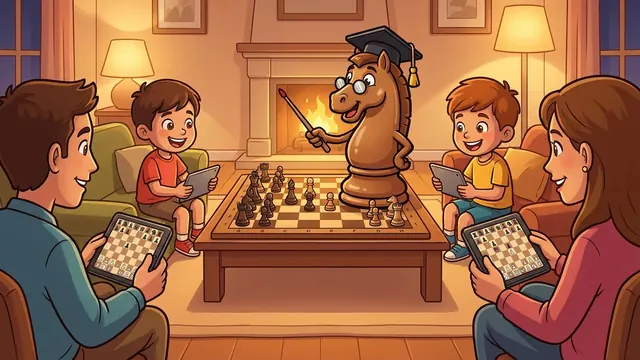 How the app solves itFamily chess: a profile for each childIn Chess Academy Kids each child has their own profile with their progress and report, and the family shares one purchase with Family Sharing. How it works.
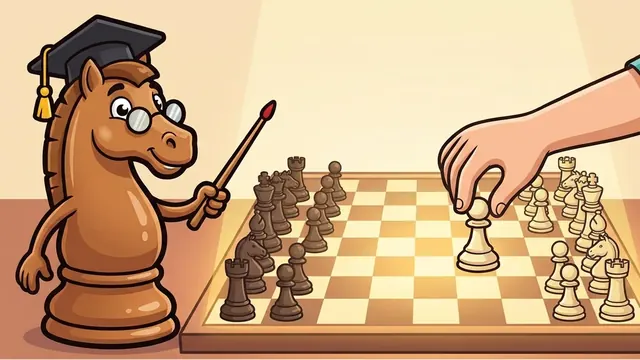 How the app solves itChess puzzles for kids: tactics with hintsThe Chess Academy Kids puzzles teach tactics such as the fork and back rank mate, with hints and solutions. How they work, who they suit, and what is free or Pro.
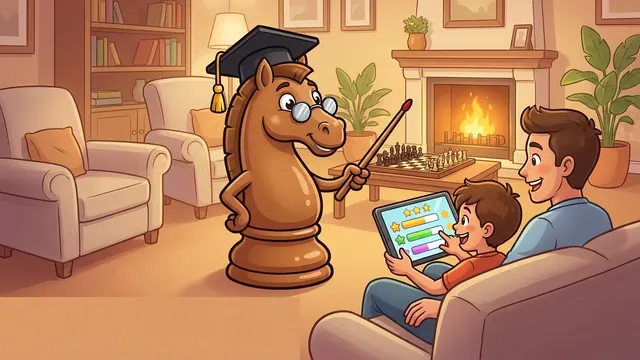 How the app solves itChess progress report for parents: how your child is doingThe Chess Academy Kids parent report summarises what each child practised and where to go next, even if you do not know chess. What it is and what it is not.
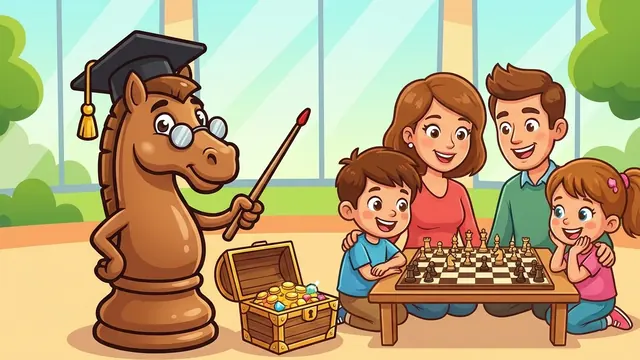 How the app solves itChess for kids without a subscription: one-time purchaseWhat is free in Chess Academy Kids, what Pro unlocks with a one-time purchase, what Family Sharing means and what the parental gate is for. No subscription, no ads.
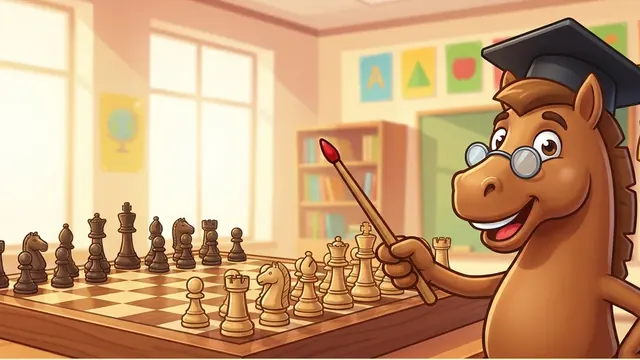 How the app solves itChess course for kids with the knight professorA talking knight professor guides the Chess Academy Kids course lesson by lesson: pieces, mates, tactics, openings. What is included, how to use it, free or Pro.
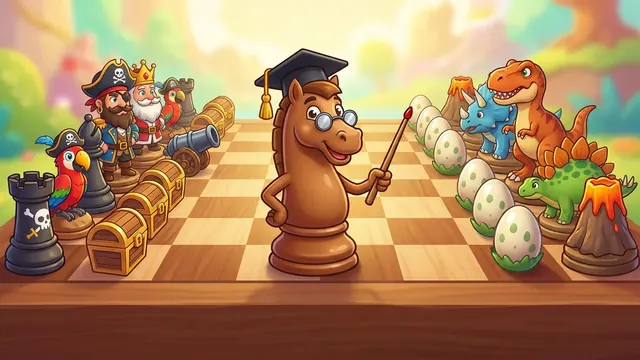 How the app solves itArmies and piece voices: chess that hooks kidsIn Chess Academy Kids the pieces can be pirates, dinosaurs, robots or wizards and speak with their own voice. What the armies are, who they suit, and what is Pro.
Comparisons and market
How chess apps for kids compare, with dated prices and honest pros and cons for both sides.
 Comparisons and marketBest chess apps for kids: how to choose in 2026Which chess apps compete for kids, how each one charges and who each suits by child age and family type. Dated data, plain talk and honest criteria for every family.
 Comparisons and marketChess Academy Kids vs Story Time Chess: board game or appStory Time Chess is a storybook board game from age 3, with no screens. We compare it with Chess Academy Kids: what each gives and when to choose one or the other.
 Comparisons and marketChess Academy Kids vs Magnus Kingdom of Chess and Play MagnusTwo apps bearing Magnus Carlsen's name against Chess Academy Kids. What is known about each, what is not verified and when each option makes sense. Dated data.
 Comparisons and marketChess Academy Kids vs Lichess: free and excellent vs guidedLichess is free, ad-free and very complete. We compare what each offers a child with Chess Academy Kids and when it is worth paying for a guided course.
 Comparisons and marketChess Academy Kids vs Learn Chess with Dr. Wolf: honest takeDr. Wolf explains every move, but with English-only voice. We compare age, language, parent report and price with Chess Academy Kids, using dated data.
 Comparisons and marketChess Academy Kids vs Kahoot! Learn Chess: a comparison for parentsKahoot! Learn Chess is a world-by-world adventure for ages 6 to 8. We compare it with Chess Academy Kids on age, coach, profiles and price, with dated data.
 Comparisons and marketChess Academy Kids vs ChessKid: an honest comparison for parentsChess Academy Kids and ChessKid compared plainly: age, languages, coach, parent dashboard and price. Where each one wins and which app suits which child and family.
 Comparisons and marketChess Academy Kids vs Chess.com: does it work for a small child?Chess.com is the biggest chess community, but not built for children. We compare plans, coach and prices with Chess Academy Kids, using dated data from our check.
Learn chess
Rules, strategy, tactics, endgames and openings explained for kids and for whoever teaches them, with diagrams.
 Learn chessWhat age to start chess? A guide by ageWhat a child of 4 to 5, 6 to 7, 8 to 10 and a teenager can understand, signs that they are ready and what to do if they are very young. No magic ages.
 Learn chessThe pin in chess: when a piece cannot moveWhat a pin is in chess, the difference between an absolute and a relative pin, how to use it and how to defend against it. With diagrams and exercises for kids.
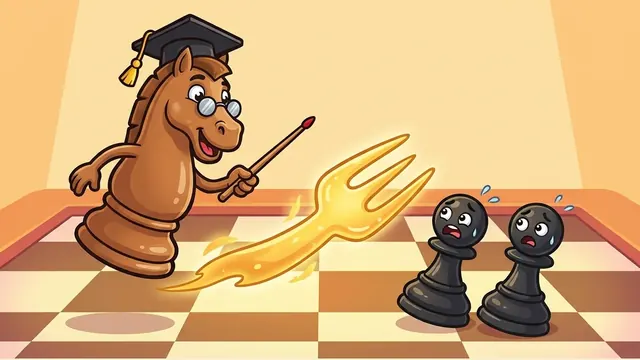 Learn chessThe fork in chess: attack two pieces with a single moveWhat a fork is in chess, how the knight, pawn, queen and bishop make it, how to spot it and how to defend against it. With diagrams and exercises for kids.
 Learn chessScholar's mate: how to play it, how to defend and why not to trust itThe scholar's mate in four moves, with checked diagrams. How to defend step by step and why you should not rely on a trap that fails against someone who knows.
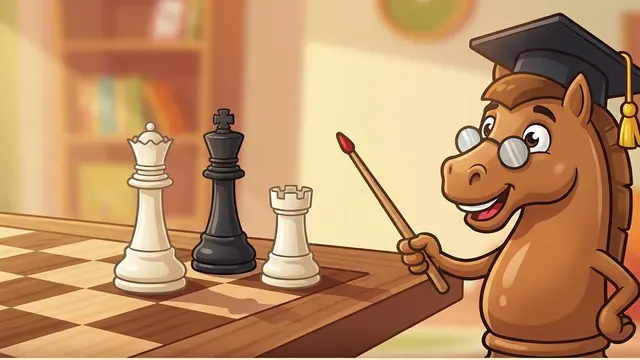 Learn chessQueen and rook checkmates: the basic chess endgamesHow to checkmate with king and queen against king, and with king and rook against king, step by step with diagrams. And how to avoid the stalemate trap.
 Learn chessPawn structure for kids: doubled, isolated and passed pawnsWhat pawn structure is, what doubled, isolated, backward, chain and passed pawns are, and what to avoid. With diagrams and exercises for kids aged 6 to 11.
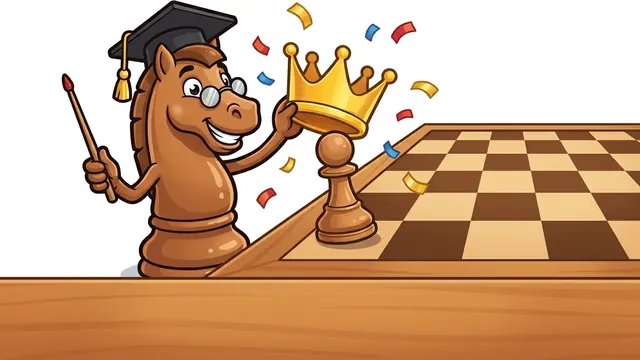 Learn chessPawn promotion: why it is almost always a queen (and when not)What happens when a pawn reaches the far side of the board: it becomes another piece. Why it is almost always a queen, when a knight is better and typical mistakes.
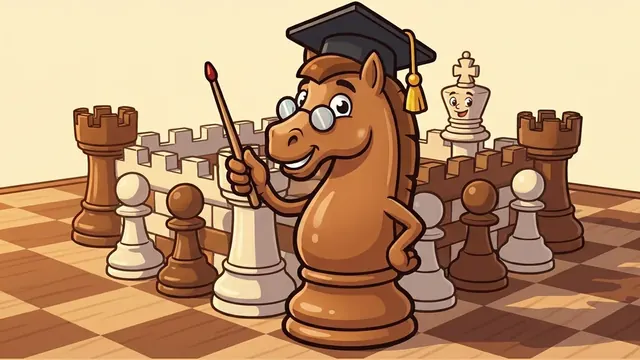 Learn chessKing safety in chess: how to keep your king safe from the startWhy a king in the center is dangerous, how to castle and keep a pawn shield, and how to teach king safety to a child aged 6 to 11 with examples and exercises.
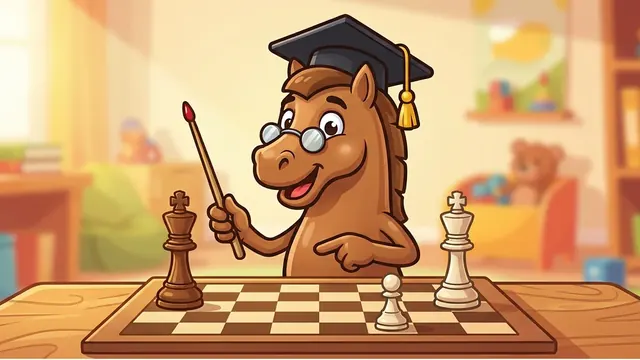 Learn chessKing and pawn endgame: the square rule and oppositionKing and pawn against king: the rule of the square, key squares, opposition and promotion. With checked theoretical positions and exercises to do at home.
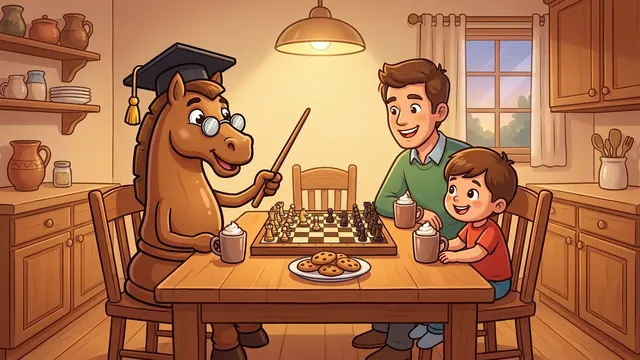 Learn chessHow to teach chess at home: a week-by-week plan for parentsA six-week plan to teach your child chess at home, whether you know little or a lot: a 15 to 20 minute routine, one-piece games and how to lose gracefully.
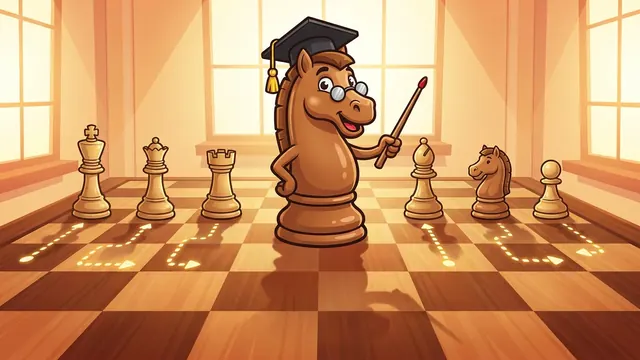 Learn chessHow chess pieces move: a guide with diagrams for kidsHow every chess piece moves: pawn, rook, bishop, knight, queen and king, with one diagram per piece, the typical mistake kids make and a memory trick for each.
 Learn chessEn passant in chess explained for kidsWhat en passant is, when you can do it, why the rule exists and how to remember it, with diagrams, typical mistakes and a home exercise for kids and parents.
 Learn chessDouble attack in chess: two threats with a single moveWhat a double attack is in chess, how it differs from a fork, its types (mate plus capture, check plus capture), how to see it and how to avoid it. For kids.
 Learn chessDiscovered attack and discovered check: the curtain that opensWhat a discovered attack, a discovered check and a double check are in chess, with real diagrams, how to see them, how to defend and exercises for kids.
 Learn chessDeveloping pieces in the opening: getting your army into the gameWhat developing your pieces means, which order to follow, which mistakes to avoid and how to teach it to a child aged 6 to 11 with examples and exercises.
 Learn chessControlling the center in chess: the first big idea for kidsWhat the four central squares are, why they matter so much, and how to teach a child aged 6 to 11 to fight for the center with pawns and pieces.
 Learn chessChess rules for kids: a complete beginner's guideThe rules of chess explained to kids aged 6 to 10 and the parents teaching them: the board, setup, goal, turns and piece values, with diagrams and exercises.
 Learn chessChess openings for kids: simple ideas, not memoryThree easy openings to start with (e4 e5, the Italian and d4), the ideas behind them, diagrams and what to do with Black. Principles before memorizing.
 Learn chessChess draws: stalemate, repetition, 50 moves and moreHow a chess game ends in a draw: stalemate, threefold repetition, the 50-move rule, insufficient material and agreement, explained for kids with diagrams.
 Learn chessChess and maths: what the studies really sayA parent's guide to chess and maths: the Sala and Gobet meta-analysis, the English trial with 4,009 pupils, and how to read a study without being misled.
 Learn chessCheck and checkmate: how to escape check and how to give mateWhat check and checkmate are in chess, the three ways out of check, three typical mates with diagrams and the difference from stalemate, explained for kids.
 Learn chessCastling explained for kids: short, long and when you can'tWhat castling is in chess, how to castle short and long, the four conditions you need and the things that stop it, with before-and-after diagrams for kids.
 Learn chessBenefits of chess for kids: what we know and what we don'tEight benefits of chess for kids checked against real studies: what each game trains, what is proven, what is only plausible, and what to do at home.
 Learn chessBack rank mate: how to play it and how to avoid it in chessWhat back rank mate is, how it is played with a rook or queen, how to avoid it by making luft for the king and how to set it up with a sacrifice. For kids.