How the app solves it
Chess puzzles for kids: tactics with hints
The Chess Academy Kids puzzles teach tactics such as the fork and back rank mate, with hints and solutions. How they work, who they suit, and what is free or Pro.
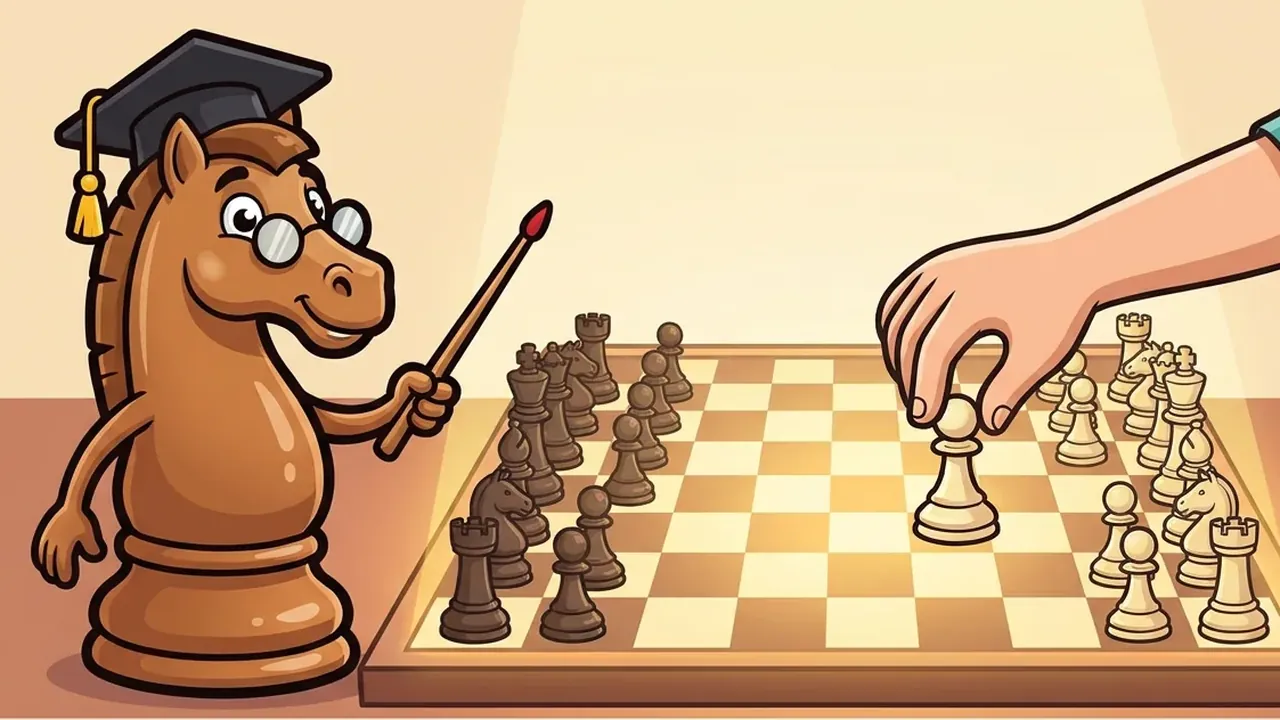
A tactic is a move or a short sequence that wins material or gives checkmate. It is the most enjoyable part of chess and the one you learn best by repeating. That is why Chess Academy Kids does not stop at explanations: every idea in the course comes with puzzles to practise with the board under your fingers.
Key points
- Short puzzles: one position, one goal, one move to find.
- With a hint if you get stuck and a solution so you understand why it works.
- They train what the course explains: fork, pin, back rank mate, undefended piece.
- Part is free (the first module); the rest comes with Pro, a one-time purchase.
- They do not guarantee your child wins games: they train the eye.
What it does
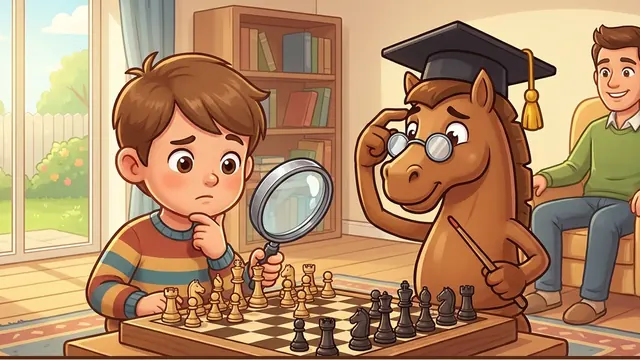
Each puzzle sets up a position on the board and gives a goal, for example "give checkmate in one move" or "win a piece". The child moves the pieces with a finger. If they get it right, they continue; if not, they try again. When they are stuck they can ask for a hint, which says where to look without giving the answer away, and if they still cannot see it, they can view the solution and understand why it worked.
That sequence (try, ask for help, understand) is what turns a puzzle into learning. Solving with the answer in view teaches nothing; solving after a hint does.
Who it is for
- Children who already know the moves and want to stop losing pieces by accident.
- Children who play too fast: a puzzle forces them to look before moving. If that is your case, read my child plays too fast without thinking.
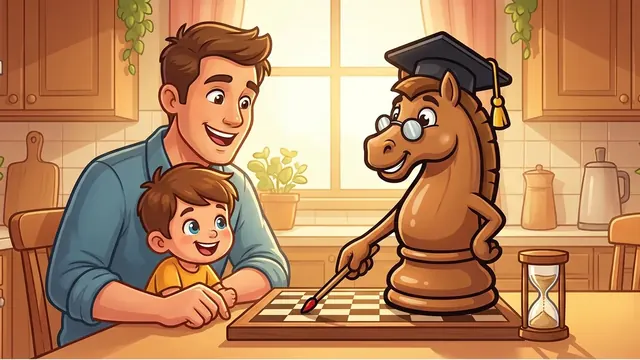
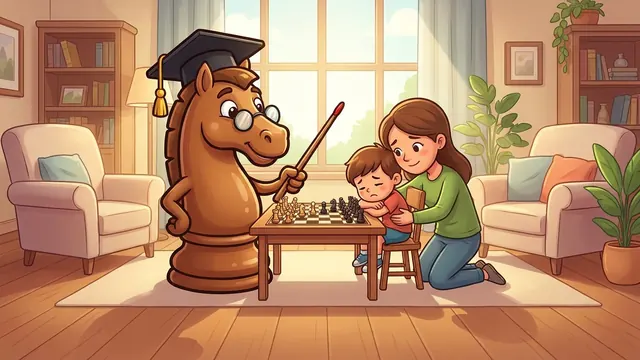
- Families who do not know chess: the hint acts as a helper, so you do not need to have the answer.
How to use it, step by step
- First do the course lesson that explains the idea (for example, the fork).
- Open its puzzles and read the goal aloud, especially with little ones.
- Before touching anything, ask: "Are there checks? Are there captures? What is my opponent threatening?"
- Move the piece. If it is not the right one, no harm done: try again.
- If a good while passes, ask for the hint. Afterwards, only if needed, the solution.
- When you succeed, ask your child: "Why does it work?" Explaining it fixes the idea.
Two example puzzles
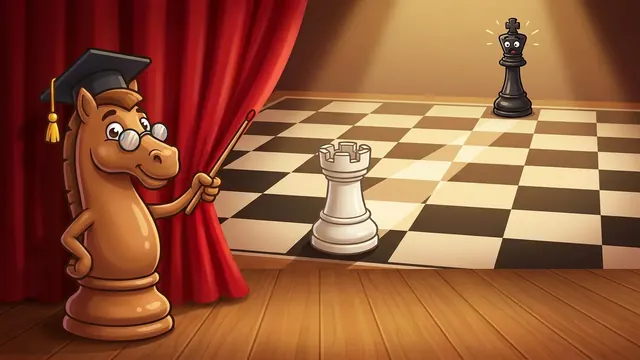
Back rank mate. The black king is boxed in by its own pawns. Which rook move gives mate?
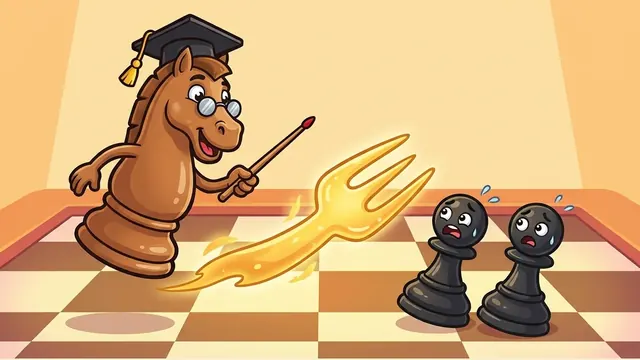
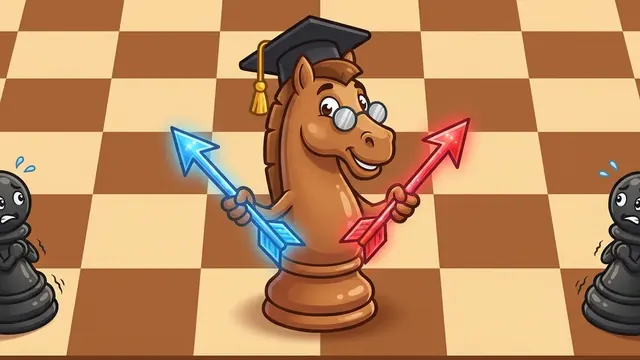
The fork. A knight attacks two pieces at once. The opponent can only save one.
The typical mistake with the fork is looking for the immediate capture and missing the double threat. A trick to remember: "the knight jumps to the square that touches two". To try at home: set up that position and ask which squares the knight would attack from c7. More examples in the fork in chess.
Tips for practising better
- Little and often. Three or four puzzles a day work better than twenty on a Sunday.
- Repeating is fine. Going back to a puzzle you solved with a hint is the best practice: the second time you solve it unaided.
- Let them tell it. When your child explains in their own words why the move works, they have learned the pattern, not just the answer.
- No stopwatch. With small children speed does not matter; looking calmly does.
- Finish with a game. After the puzzles, a short game against the app is the natural way to see the ideas in action.
Honest limits
- The puzzles are the app's own: there is no library of thousands of tournament problems and no comparison with other players.
- Solving puzzles does not guarantee winning games; it does help to recognise patterns.
- You do not play strangers and there is no chat.
- A very young child will need you to read the goal.
What is free and what is Pro
The first module of the course, with its puzzles, is free. The full course and everything that goes with it is Pro, a one-time purchase (not a subscription) with Family Sharing. It is covered in detail in chess without a subscription.
How it fits with the rest
The puzzles are the middle step between the course with the knight professor and real games against the app. If your child gets frustrated when it does not work out, remember that a hint is not cheating: it is learning. More in my child gets upset when losing. And if you want to see how other apps treat tactics, there is the comparison with ChessKid.
Do the puzzles have hints?
Yes. If the child is stuck they can ask for a hint that says where to look, and then see the solution to understand why the move works.
How many puzzles are free?
Those in the first module of the course. The rest of the puzzles come with Pro, which is a one-time purchase with no subscription.
Do they work for kids who cannot play yet?
It helps to have seen the lesson that explains the idea first. The course goes in order: first it explains, then it practises.