Learn chess
Discovered attack and discovered check: the curtain that opens
What a discovered attack, a discovered check and a double check are in chess, with real diagrams, how to see them, how to defend and exercises for kids.
A discovered attack is a move in which you move one piece and, by stepping aside, open the line of another piece of yours that was behind it. That second piece attacks (or gives check) without having moved. The opponent faces two threats at once, and one of them is often a check.
Key points
- In a discovered attack there are two of your pieces in line: the one that moves (in front) and the long-range one (behind: bishop, rook or queen).
- If what is uncovered is a check, it is called a discovered check. It is one of the strongest tactics.
- Since the opponent must answer the check, the piece that moved can do whatever it wants: capture the queen, for example.
- If the piece that moves also gives check, it is a double check: the king must move, and sometimes it is mate.
- To defend, watch what is on the line of your king or queen behind an enemy piece.
What a discovered attack is, in one sentence
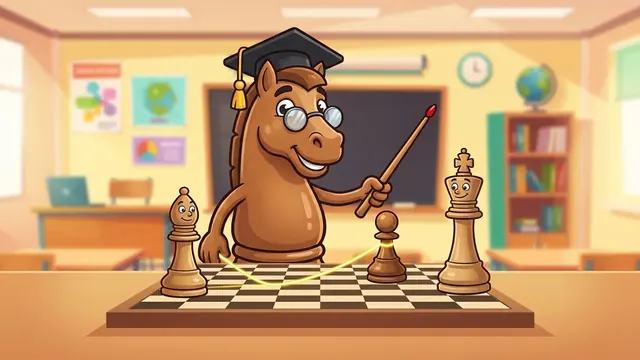
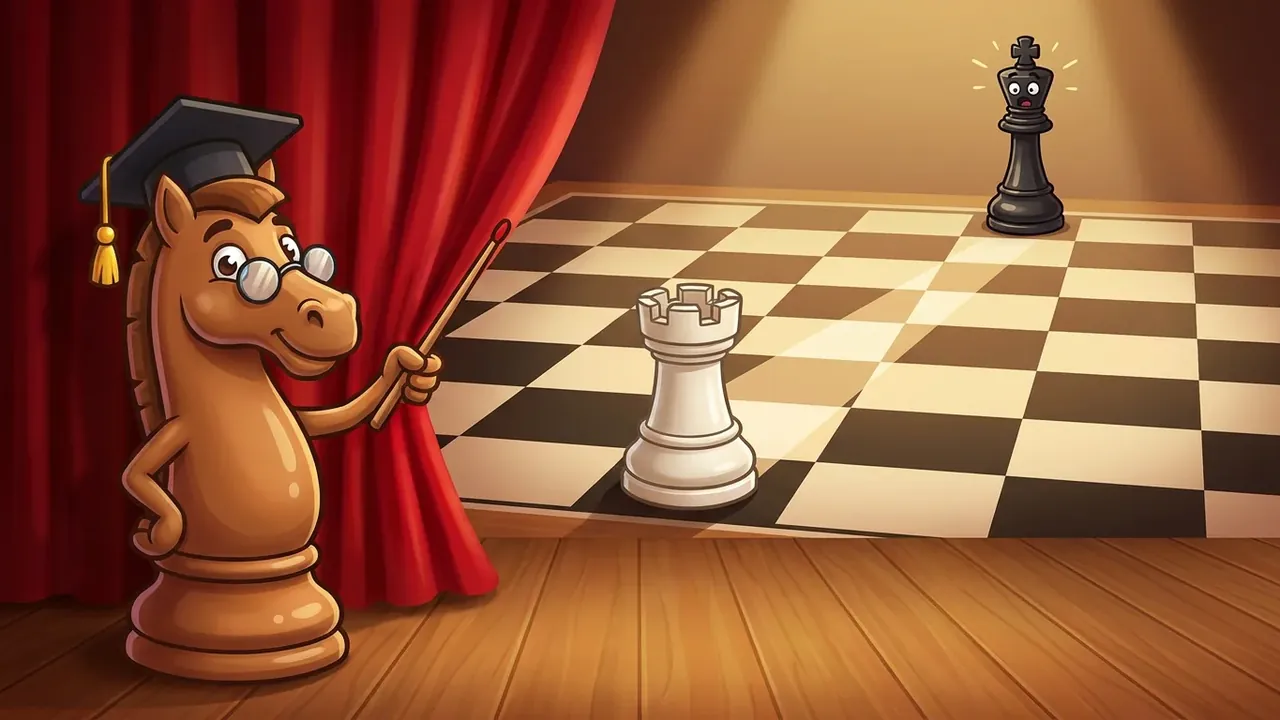
A piece steps aside and lets you see the one behind it: like opening a curtain and revealing what was hidden.
Imagine a white rook with a white knight in front of it. While the knight is there, the rook "cannot see". When the knight jumps, the rook sees the whole file. That is the discovery.
Example 1: a discovered check that wins the queen
The white rook on e1 aims at the black king on e8, but the bishop on e2 blocks its view. The black queen is on c4.
The bishop captures the queen on c4. By leaving the e file, the rook on e1 gives check to the king. Black has to save the king, so it cannot recapture. White has won the queen.
This is the strongest part of the discovered check: the piece that moves is free from the opponent's threat, because the opponent is forced to deal with the check.
Example 2: a discovered attack with check
Here the piece that moves gives check and, at the same time, uncovers an attack on the queen.
The bishop on d5 captures the pawn on f7 with check. By leaving the d file, the rook on d1 sees the queen on d8. Black has to deal with the check (the king can capture the bishop or step aside), and afterward the rook captures the queen.
There are two threats here: the bishop's check and the rook's attack on the queen. See the double attack article if you want to see other kinds of two threats at once.
Example 3: the double check
A double check is when two pieces give check to the king at the same time. There is no way to capture or block both, so the king has to move. Sometimes it cannot, and it is mate.
The knight on e5 jumps to f7. It checks the king on h8 by itself, and it also uncovers the bishop's diagonal from b2 to h8: two checks at once. The king cannot go to g7 (the bishop watches it), it cannot go to g8 or h7 (they are taken by its own pieces), and the two checks cannot both be captured or blocked. It is checkmate.
An example of defense: take the queen off the line
If you have your queen on the line of an enemy rook, even with a piece in between, you are in danger.
It is the same position as example 2, but now Black is to move. With Queen to e7, the queen leaves the d file and the threat disappears. On top of that, the queen on e7 still protects f7.
The best defense is not to leave valuable pieces (the king or the queen) on the same line as an enemy long-range piece that has a piece of its own in front of it.
The typical mistake
- Putting the queen or the king on the line of an enemy rook or bishop even if there is a piece in between. That piece in between can step aside with tempo.
- Not seeing your own discovery. Many times you have the rook behind the knight and do not think of moving the knight with a threat.
- Not considering the double check. When the king is boxed in by its own pawns, a double check can be mate.
- Moving the uncovering piece without thinking where. The piece that moves can give check, capture or attack: make the most of that free move.
How to spot it in a game: the magic question
The question for attacking is: do I have a long-range piece with a piece of mine in front of it, and behind the path is an enemy piece or the king? If so, where can the piece in front go with a gain?
And for defending: is there an enemy piece in front of one of its long-range pieces aiming at my king or my queen?
If your child tends to move fast, it is an ideal question to look at calmly: my child plays too fast without thinking.
How to defend
- Move the king or the queen off the line before the piece in between moves.
- Block with a piece of yours between the king and the enemy rook or bishop.
- If you are given a discovered check, answer the check and look for how to minimize the damage. Sometimes you can capture the piece that gave the double check or give another check.
- Avoid leaving your king on an open line without a piece of your own covering it.
A trick to remember it
"Open the curtain." When you have a long-range piece with another in front, ask yourself: what happens if I open the curtain?
For the smallest: a magic trick. The magician moves one hand so we look there, and meanwhile the other one does the trick. The piece that moves is the visible hand; the one left uncovered is the one doing the trick.
Exercises to do at home
Exercise 1: knight with a discovered check
The white rook on d1 is behind the knight on d5, and the black king is on d8. The black queen is on b6. What do you do with the knight?
Solution: the knight captures the queen on b6. By leaving the d file, the rook gives check to the king on d8. Black must deal with the check and cannot recover the queen.
Exercise 2: knight and check, attack on the queen
The white knight on e5 blocks the file of the rook on e1, and the black king is on e8. The black queen is on d8. Where does the knight jump to give check (by discovery) and attack the queen?
Solution: the knight jumps to c6. The rook gives check along the e file and the knight attacks the queen on d8. After the king moves, the knight captures the queen.
Exercise 3: Black to move
Now as Black. The black bishop on e7 blocks the rook on e8, and the white queen is on c5.
Solution: the bishop captures the queen on c5. By leaving the e file, the rook on e8 gives check to the white king. White cannot recapture and Black wins the queen.
Where to practice it
The app has tactics puzzles with a hint and a solution, with discovered attacks and double checks: chess puzzles for kids: tactics. The course with the knight professor has a tactics block that explains them step by step: chess course with the knight professor. And to try them in complete games, you can play against the app with a coach.
To carry on with tactics, see the fork in chess, the pin in chess and back rank mate.
What is the difference between a discovered check and a double check?
In a discovered check, the piece that moves does not give check: the one behind it does. In a double check, both give check at once: the one that moves and the one left uncovered. The king can only move.
Why is the discovered check so strong?
Because the opponent must answer the check, so the piece that moved is free to do whatever it wants: capture the queen, attack a rook, whatever suits best. It is a double threat in disguise.
What is a discovered attack?
It is the same thing without check: the piece that moves opens the line of another piece that attacks something important, like the queen, and at the same time the piece that moves creates another threat.