What worries parents
My child plays too fast: teaching them to stop and look
They move in two seconds and regret it. The "checks, captures, threats" method, checking before moving and stop-and-look exercises for impulsive kids.
Picture the scene: you have set up the board, your child picks up a piece almost before you sit down and moves. Again. And again. In four moves they have lost their queen, they cry a little and say "I just didn't see it". You have told them twenty times "think before you move", and the phrase no longer means anything. It probably sounds familiar.
Playing fast is one of the most normal things in a child who is starting out. Thinking calmly is a skill that is learned, not a character flaw. And there are very concrete ways to practise it.
Key points
- Small children move fast because they want to play, not because they do not care: calm is a skill that can be trained.
- "Think before you move" does not work; a concrete method they can follow does.
- The best-known method: look at checks, captures and threats before every move.
- A physical pause (hands on knees, count to three) helps break the impulse.
- There is little solid research on impulsiveness and chess; the ideas in this article are practice, not proven science.
Why they move so fast
The reasons are almost always these:
- They like moving. Touching the piece and watching the board change is very satisfying.
- They do not know what to look at. "Thinking" is vague. If they do not know what to look for, looking feels like a waste of time.
- They want to finish. A long game is tiring, and moving fast is a way to end it sooner.
- They imitate what they see. Videos of blitz games or tablet games reward speed.
- They have not built the habit. A young child's brain is still practising how to hold back an impulse before acting, and that is learned over time.
What science says: we have not verified any solid study on impulsiveness in children's chess, and we will not promise that chess reduces it. What there is is a plausible observation: chess gives a very concrete reason to slow down, because a hasty move is paid for immediately with a lost piece. If your child's impulsiveness worries you a lot, at home and at school, for months, talk to your paediatrician or a professional; chess is not a treatment.
The method: checks, captures, threats
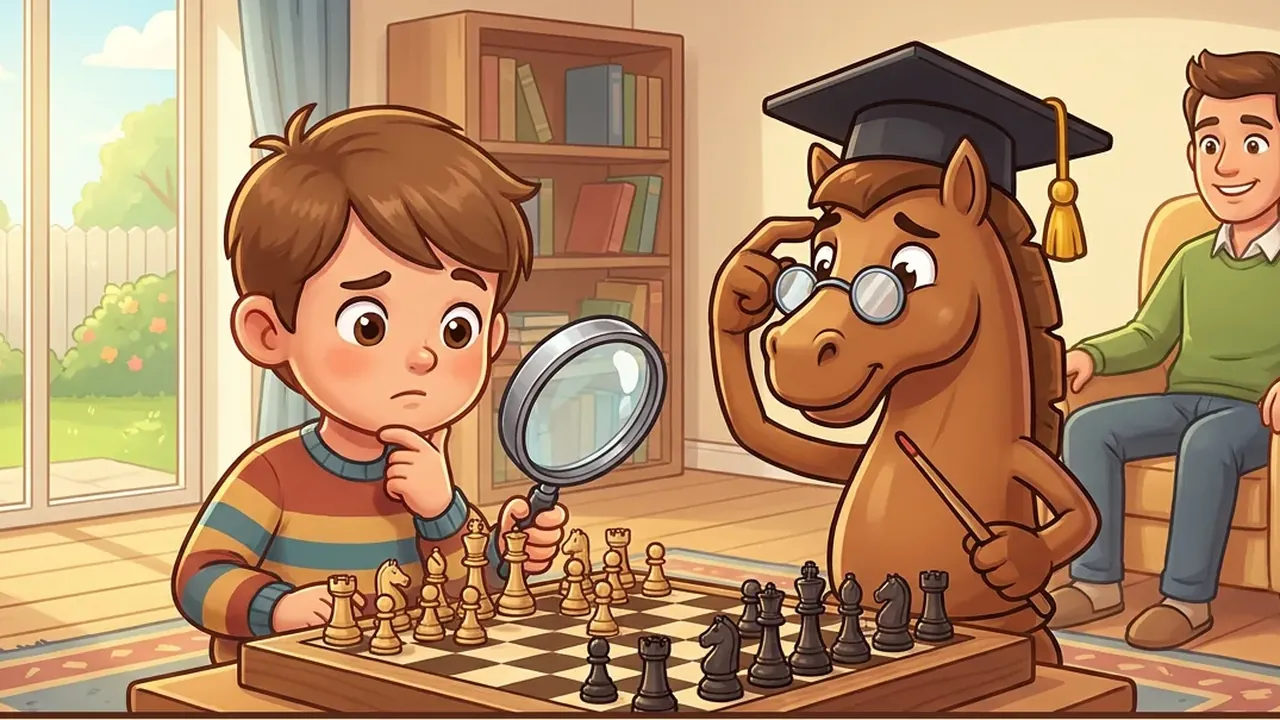
It is the most useful rule for a child who moves quickly, because it tells them what to look at instead of "think". Before moving (and also when the opponent moves), do it in this order:
- Checks. Can I give check? Can the opponent give it to me?
- Captures. Can I capture something? Can the opponent capture something of mine?
- Threats. What is the opponent threatening with their last move? What can I threaten?
It is summed up with three fingers: one finger for each word. With three fingers up, the child remembers what to check. Ideally they say it out loud at first and, over time, do it silently.
Let us look at each step.
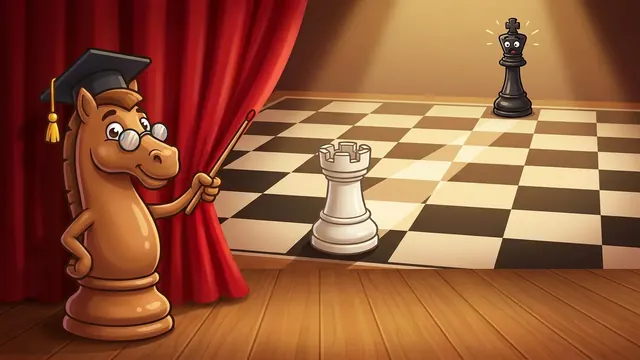
Check. The bishop on f1 goes to b5 and gives check to the black king.
Capture. The white rook can capture the black queen, which is unprotected.
Threat. Here there is no capture or check available, but the black knight on e4 threatens the white queen on d2. Whoever does not look at the opponent's threats loses the queen without noticing.
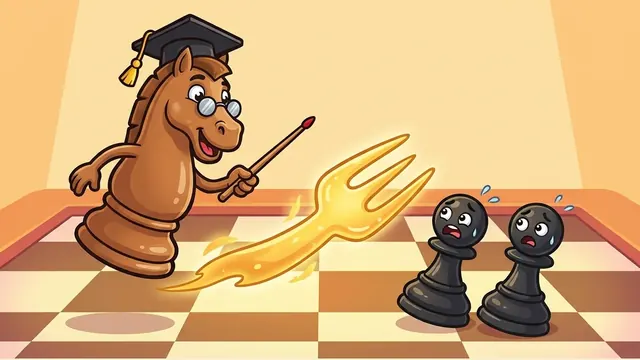
To learn more about how pieces attack: the fork and double attack.
Checking before moving: the traffic light
A very easy trick to remember is the traffic light, with a three-second pause:
- Red: hands on knees. Look at the whole board.
- Amber: go over it with the three fingers (checks, captures, threats).
- Green: now move.
It sounds like a game, and it is. With children aged 5 to 7, the traffic light works best if you do it first, out loud, playing against them.
A second trick: "hand in pocket". Until the child has decided, they do not touch the piece. It removes the reflex move, which happens when the hand goes faster than the head.
Stop-and-look exercises
These exercises do not need a full game:
- "What has changed?" You move a piece and your child says what it threatens now. Have them follow the three-finger rule.
- "Find the mistake." Set up a position with an unprotected piece and the child has to find it.
- "Say it out loud." During a game, the child says "my check, my capture, my threat" before moving. They count on the board, not in their head.
- Minimum time. Agree on a minimum of five seconds per move (counted under the breath). Go up to ten as they get used to it.
- "What if the opponent...?" After moving, ask "what would I do if I were the opponent?"
The chess puzzles for kids in Chess Academy Kids are short and come with hints: they make you look before answering. And playing against the app with a coach lets you undo a move and see at once why it was bad: the coach rates each move and explains why, which is exactly what someone who does not stop to check needs.
How you should react
- Do not correct every fast move. If you do, they learn not to play with you.
- Say what you want, not what you do not want. "Look at the three fingers first" instead of "don't play so fast".
- Recognise the effort, not the result: "you stopped and found the check".
- Be patient. It is a habit, not a switch. It will take weeks.
- Avoid clocks and speed games for now, because they reward exactly the opposite of what you are practising.
What to do today
- Teach the three fingers: checks, captures, threats. Once, while playing.
- Set the "hand in pocket" rule until they decide.
- Play a short game of 10 minutes in which they pause and say it out loud before each move.
- When it ends, choose ONE slip and look at it together, without blame.
- Repeat tomorrow. With consistency, in a couple of weeks you will notice the change.
More on helping at home in how to teach chess at home.
A sample game, move by move
Try playing a short "narrated" game. Before each move, your child says out loud what they see: "I have no check; I can capture the knight, but it is protected; the opponent threatens my bishop". Then they decide. At first the game will take twice as long, and that is fine: it is not about winning but about practising the pause.
You can narrate your moves too, with a deliberate slip now and then ("oops, I almost left my rook unprotected"). Children learn a lot from seeing an adult get it wrong and correct it. And when your child finds a slip of yours before you move, celebrate it: they will be doing exactly what we are after.
In short
Playing fast is normal in a child starting out, and "think before you move" does not tell them how. A concrete method (checks, captures, threats), a three-second traffic light and stop-and-look exercises give them something to do in that pause. Research on impulsiveness and chess is scarce and we promise nothing; what does work in practice is turning "thinking" into three questions that can be answered by looking at the board.
Why does my child move so fast without thinking?
It is very common in young children: they like moving, they do not know what to look at and they are still learning to hold back an impulse. A concrete method, such as looking at checks, captures and threats before moving, gives them something to do in the pause.
What is the checks, captures, threats method?
It is a rule of three questions asked before each move: can I give check or can they give it to me, can I capture something or can they capture something of mine, and what is the opponent threatening? It is a simple way to look at the whole board before moving.
Does chess help reduce impulsiveness?
There are no solid studies showing it. What is plausible is that chess gives a concrete reason to slow down, because a hasty move costs a piece. If your child's impulsiveness worries you a lot, talk to a professional.