What worries parents
My child is losing interest in chess: how to bring the spark back
They started with excitement and now the board gathers dust. Why it happens, small goals, characters, variety and when to let it rest without pushing.
Imagine that three weeks ago your child talked about nothing else: they asked to play as soon as they got home from school, beat you (or thought they did) and told the grandparents. Today you suggest a game and they answer "later", with the face of someone hearing the word "homework". The board has sat in the same place for two days with the pieces half set up. It probably sounds familiar, and you may be wondering whether you did something wrong.
Almost certainly you did not. Losing interest in something started with enthusiasm is perfectly normal in childhood. What is useful is understanding why it happens and what to try, without turning chess into an obligation.
Key points
- It is normal for the initial enthusiasm to drop; it does not mean the child "doesn't like" chess.
- The most common causes: too hard, too easy, losing too much, boredom or feeling pressure.
- Small, visible goals, characters and variety bring back the desire better than insisting.
- Forcing usually makes it worse: a few weeks off is not a failure.
- There is little solid research on motivation and chess; what follows is practical experience, not proven science.
Why interest fades
Think of the first stage as a honeymoon: everything is new, each piece is a discovery and each move is a small victory. Then comes the plateau, where they no longer learn something new every day and start noticing their own mistakes. These are the most repeated causes:
- They got stuck. They no longer know how to improve and feel they always lose in the same way.
- They lose too much. If they play someone much stronger (an adult, an older sibling), every game is a small defeat. See my child gets upset when losing.
- They win too much. If the opponent is too easy, they get bored.
- They feel pressure. If chess became "you have to practise", it is no longer a game.
- They have no one to play with. A two-person game needs company, and friends may have moved on to other hobbies.
- It is just a phase. Sometimes interest leaves and comes back by itself, like dinosaurs or cars.
What research says: we have not verified any study on how to sustain motivation in children's chess, so we will not invent one. The only nearby fact: in the large English school trial (4,009 pupils aged 9 and 10), half the children said they liked the lessons a lot and only 8% said they did not. So many children enjoy chess when it is taught well, but that says nothing about how to keep interest up in the long run.
Small goals, not a vague "you need to improve"
For a child, "improving" is abstract. A concrete, reachable goal is understood at once. Some ideas for a ladder of goals, from easiest to hardest:
- This week: learn one checkmate pattern (for example, the back rank mate).
- This week: solve five puzzles without a hint.
- This month: win one game against the app's first level.
- This month: leave no piece unprotected in three games in a row.
- This term: master a new tactic, such as the fork.
Write the goals down on a card stuck to the fridge and cross each one off when done. What is seen motivates. It matters that the goal depends on them and not on you or the opponent: "beat Dad" is a poor goal if Dad is far stronger.
Characters and stories
Many children do not get bored of chess: they get bored of a black and white board with no story. Changing the presentation can bring back the spark:
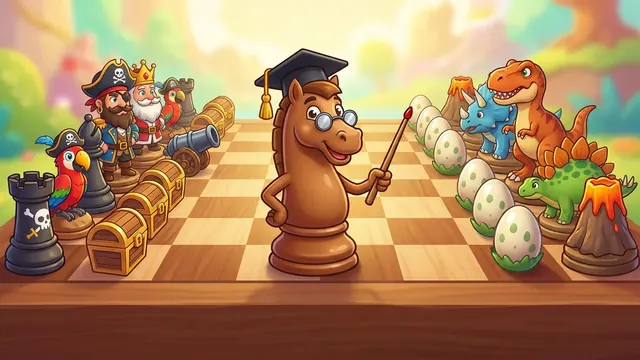
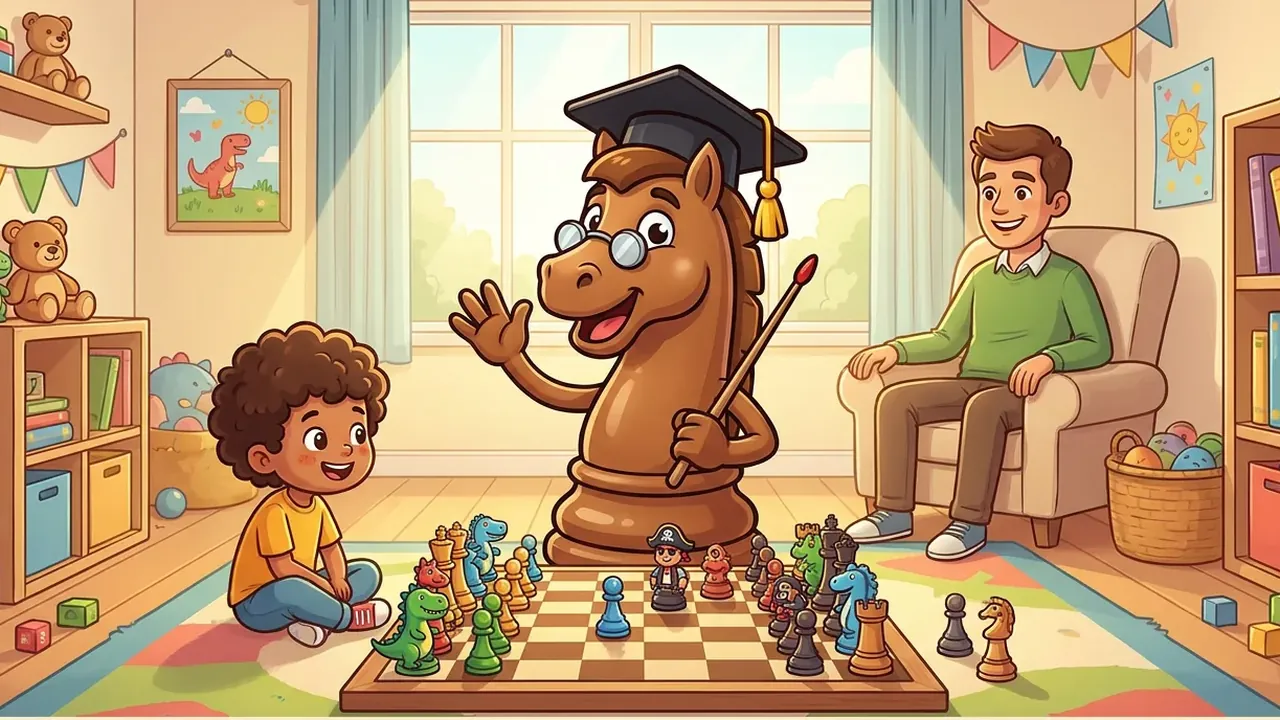
- Themed armies. In Chess Academy Kids there are armies of pieces with themes (medieval, pirates, dinosaurs, robots, toys, wizards) and voices for the pieces. A child who loves dinosaurs can play with dinosaurs. It is in armies and piece voices.
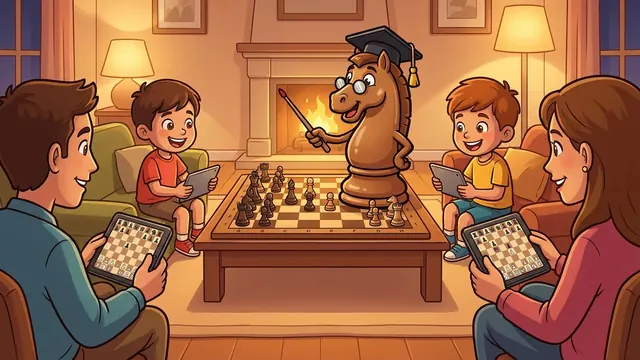
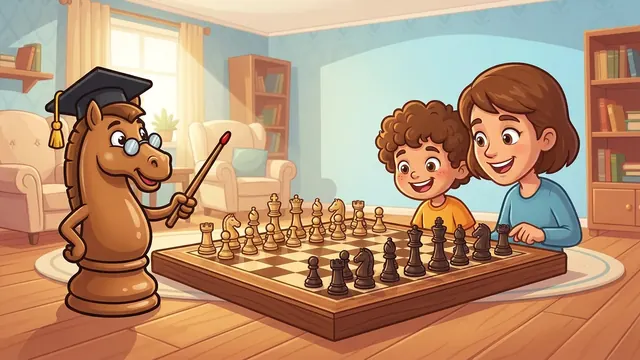
- The knight professor. A character that teaches and encourages, instead of an adult who corrects. See chess course with the knight professor.
- Simple stories. "The rook guards the castle", "the bishop is an explorer who only walks diagonally". A good story is remembered better than a rule.
You do not need to turn everything into a fairy tale or buy anything for it to work: with things from home you can improvise an army of toys.
Variety: it is not all games
Playing games is only one part of chess, and a child tired of playing may enjoy something else:
- Puzzles. Short, with a clear answer. A child who cannot stand losing may love solving. See chess puzzles for kids.
- Lessons. Learning something new (a special move, a checkmate trick) gives a sense of progress.
- Playing the app. A patient opponent with levels and a coach. Playing against the app with a coach.
- Physical board as a family. A one-day tournament with a paper diploma.
- Odd modes. Games with few pieces, "checkmate in the fewest moves" or a "pawns only" day.
If there are siblings, each can have their own profile and pace: family chess profiles per child.
Do not force it: the value of rest
It is tempting to say "but you loved it, keep going!" It almost never works. A child who is made to play links chess to punishment, and what we want is for them to link it to a good time.
If interest drops completely, there is an honourable way out: let it rest for two or three weeks and suggest it again without pressure. Leave the board somewhere visible. There is no need to count the days. Many children come back by themselves when they have a friend to play with, after seeing someone else play, or simply on an ordinary day.
And if they do not come back, that is a valid answer too. Chess is not essential. For what is known about its benefits, which are fewer than advertised, read benefits of chess for kids.
What to do today
- Ask without judging: "What do you like least about chess right now?" Listen to the answer without defending the game.
- Change one thing, only one: the format (puzzles instead of a game), the opponent, the moment or the look (a themed army).
- Set one small goal with them: something they can reach in a week.
- Shorten the time: 10 minutes, with a clear end.
- If they say no, accept the no and offer again in two weeks, in a different way.
With the progress report for parents you can see what they have practised without asking every day.
Coming back after a break
When a few weeks have passed and you notice your child approaching the board, do not make a ceremony of it. Suggest something small: "Do you want to see a new trick?" or "Will you show me how to play with the pirates?" Start with what they liked most, not with what they left unfinished. If a puzzle was stuck, do not return to it: move to another.
Also watch how each session ends. If it ends with them wanting more, you are doing well; if they are in a hurry to leave, shorten it or change activity. And do not forget to tell the family in a positive way ("look what they can do"): a kind audience is a good motivator.
In short
Losing interest is normal and almost never means a child dislikes chess. It is usually a plateau, repeated defeats, boredom or pressure. Small goals, characters, variety and breaks work better than insisting. There is not much research on this topic, so what is proposed here is practice, not science. What matters is that when they come back, they find it a game.
Is it normal for my child to lose interest in chess?
Yes, very normal. After the initial novelty comes a plateau and interest drops. It may be a phase, and many children return by themselves. Changing the format or taking a few weeks off usually works better than insisting.
Should I make my child keep practising?
It usually does not work: a child who is made to play links chess with an obligation. It is better to shorten the time, change the type of activity (puzzles, lessons, another opponent) or let them rest for a few weeks and return without pressure.
How can I motivate a child with chess?
With small, visible goals that depend on them, characters and stories, variety between games, puzzles and lessons, and short sessions with a clear end. There are no solid studies on motivation in children's chess, so these are practical ideas.
Sources
- Jerrim, J. et al. (2016). Chess in Schools: Evaluation report and executive summary. Education Endowment Foundation. https://files.eric.ed.gov/fulltext/ED581100.pdf (accessed 2026-10-26).